Buying used auto parts is one of the easiest ways to save money on car repairs, but there’s always one question in the back of your mind: is this part actually still good?
The truth is, a lot of parts in salvage yards still have plenty of life left in them. You just need to know what to look for. With a little time and the right approach, you can walk away with reliable parts and avoid the guesswork.
Start with the Vehicle It Came From
Before you even touch the part, take a look at the vehicle it’s coming from. This can tell you more than you think.
If the car looks relatively clean, undamaged in the area you’re pulling from, and not completely picked over, that’s a good sign. A rear-end collision car, for example, may still have a perfectly usable engine or front-end components.
On the flip side, if the vehicle shows heavy rust, fire damage, or major impact near the part you need, it’s probably worth moving on.
Check for Visible Wear and Damage
This is where knowing how to inspect used car parts really matters. You don’t need to be a mechanic, but you do want to slow down and look closely.
Here are a few things to watch for:
- Cracks, bends, or warping in metal components
- Excessive rust or corrosion
- Leaking fluids or residue buildup
- Burn marks or melted plastic on electrical parts
- Worn-out rubber on hoses, seals, or bushings
If something looks off, it usually is. Trust your instincts here.
Look at Connection Points and Mounting Areas
One of the most overlooked salvage yard tips is checking how the part actually connects to your vehicle.
Mounting brackets, bolt holes, and connectors should be intact and not stripped, broken, or bent. Even if the part itself looks fine, damaged connection points can make installation a headache or even impossible.
A quick visual check here can save you a lot of frustration later.
Compare It to Your Existing Part
If you can, bring your old part with you or at least have a photo on your phone. Small differences between model years or trims can lead to parts that almost fit, but not quite.
Match up:
- Shape and size
- Connector types
- Mounting locations
- Part numbers if visible
This step alone can prevent wasted time and return trips.
Be Smart About Electrical Components
Electrical parts can be a great value, but they require a bit more caution.
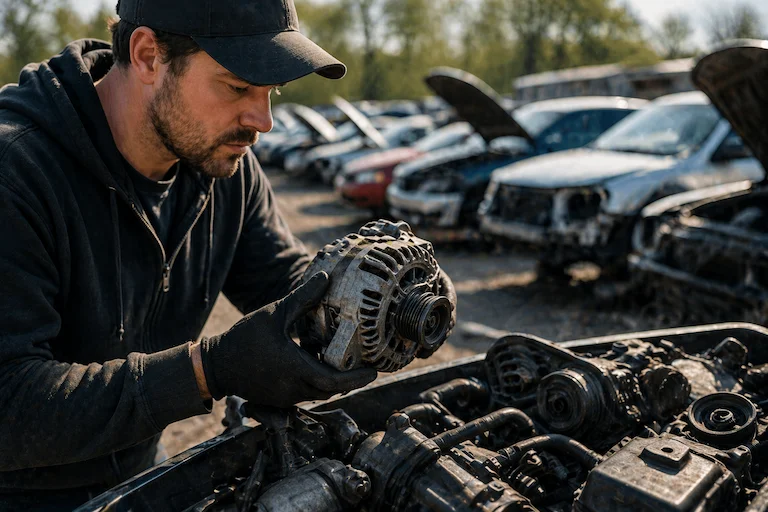
Items like alternators, starters, and sensors should be inspected for:
- Clean, intact connectors
- No signs of burning or corrosion
- Solid housing with no cracks
If the yard offers any kind of warranty or exchange, that’s a bonus when picking up electrical components.
Mileage Still Matters
Many salvage yards label vehicles with mileage, and that’s worth paying attention to. Lower mileage often means less wear, especially for mechanical components like engines, transmissions, and suspension parts.
That said, condition still matters more than mileage alone. A well-maintained higher-mile vehicle can sometimes offer better used auto parts quality than a neglected low-mile one.
Don’t Skip the “Feel” Test
Sometimes the simplest checks are the most effective.
Spin pulleys. Move joints. Press on components. You’re looking for anything that feels loose, stuck, or uneven. If it doesn’t move the way it should, it’s probably not worth taking home.
This is one of those salvage yard tips that separates a good find from a bad one.
Why Buying Used Parts Is Still a Smart Move
When done right, buying used auto parts is one of the most practical ways to maintain your vehicle. You’re getting OEM parts at a lower cost, and you’re helping reduce waste through auto parts recycling.
It’s not about cutting corners. It’s about being smart with where you spend your money.
Find Quality Parts Close to Home
Carolina Pick N Pull makes it easier to find reliable used parts across multiple regions:
- The Wilmington area through Cape Fear Pick N Pull
- The Fayetteville area through Sandhills Pick N Pull
- The Myrtle Beach area through Grand Strand Pick N Pull
With a constantly rotating inventory, you’ll have access to a wide range of vehicles and parts, giving you a better chance of finding exactly what you need.
A Better Way to Buy Used Auto Parts
The key to buying used auto parts isn’t luck, it’s knowing what to look for. Take your time, inspect parts carefully, and don’t settle for something that doesn’t feel right.
With a little patience and the right approach, you can find high-quality parts, save money, and keep your vehicle running strong without overpaying.