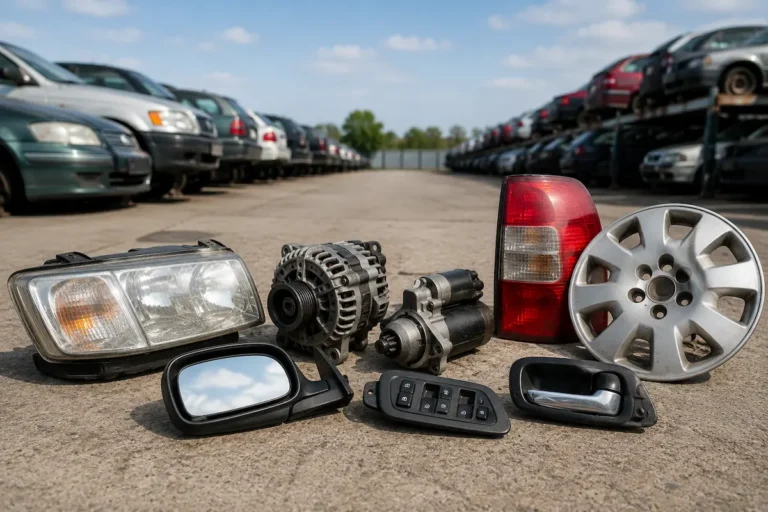
Can used auto parts help keep an older car on the road? Absolutely. For many high-mileage vehicles, replacing a failed component with a quality used part can be a practical way to extend the life of the vehicle without spending new-part prices.
The trick is knowing which parts make sense to buy used.
Some components can provide years of additional service when they’re carefully inspected and matched to the right vehicle. Others, particularly routine wear items and certain safety components, are usually better purchased new.
If you’re searching for affordable parts for high mileage cars, here are some of the most reliable used auto parts to look for at a salvage yard.
What Used Parts Are Reliable for Older Cars?
1. Alternators
Alternators are a popular salvage yard find because they’re removable, widely available, and can often be reused successfully.
If your older car has a failing alternator, finding one from a compatible vehicle can be considerably less expensive than buying a brand-new unit.
Before pulling an alternator, check the donor vehicle’s year, engine, electrical connections, mounting locations, and part number when available.
You can search Carolina Pick N Pull’s current vehicle inventory to look for compatible donor vehicles before visiting the yard.
2. Starter Motors
A failed starter can leave an otherwise dependable high-mileage vehicle sitting in the driveway.
Used starter motors are another common option for older cars, particularly when replacement parts are becoming harder or more expensive to source.
As with an alternator, compatibility is important. Compare the starter’s mounting points, electrical connections, engine application, and part number before purchasing.
3. Factory Mirrors
Side mirrors are one of the safest bets when shopping for used replacement parts.
Factory mirrors often fit better than inexpensive aftermarket replacements and can include the same power, heating, signal, or other features your vehicle originally had.
You might even get lucky and find one in the correct paint color.
Inspect the housing, mounting points, wiring connector, glass, and adjustment mechanism before removing it.
4. Headlights and Taillights
Headlight and taillight assemblies can become faded, cracked, damaged in minor collisions, or difficult to find as a vehicle gets older.
A salvage yard can be a great source for original factory replacements.
Check the housing for cracks or moisture, inspect mounting tabs carefully, and make sure the electrical connections match your vehicle.
5. Interior Parts
Interior components can be some of the most reliable used parts because many don’t experience the same mechanical wear as engine and suspension components.
Good candidates include:
- Door panels
- Center consoles
- Cupholders
- Glove boxes
- Interior door handles
- Sun visors
- Switch panels
- Dashboard trim
- Armrests
- Factory knobs and controls
For a car that’s 10, 15, or even 20 years old, a salvage yard may also be one of the few places where you can still find original interior pieces.
6. Body Panels
A dented fender, damaged hood, or broken trunk lid doesn’t necessarily need to be replaced with a brand-new part.
Used OEM body panels can be a cost-effective option for keeping an older vehicle looking good and functional.
Doors, hoods, trunk lids, fenders, tailgates, and similar components are commonly reused.
Finding the right color can save even more money if the existing paint is in good enough condition for your needs.
7. Door and Window Components
Older cars commonly develop issues with door handles, window regulators, switches, lock mechanisms, and related components.
Many of these parts can be sourced from another vehicle and installed without replacing the entire door assembly.
Whenever electrical components are involved, compare connectors and part numbers rather than relying only on the vehicle’s model year.
8. Air Intake Components
Plastic air boxes, intake tubes, resonators, brackets, and covers can crack or break as a vehicle ages.
Fortunately, these parts usually don’t experience significant internal mechanical wear, making them good candidates for salvage yard replacements.
Check carefully for cracks, broken clips, and damaged mounting points before pulling the part.
9. Factory Wheels
If you have a damaged or badly corroded factory wheel, finding an OEM replacement at a salvage yard can make sense.
You’ll need to match the wheel size, bolt pattern, offset, and other specifications.
Inspect any used wheel carefully for cracks, bends, serious corrosion, or obvious impact damage before purchasing it.
Can Used Parts Really Extend the Life of a High-Mileage Car?
Yes, when the rest of the vehicle is in good condition.
Keeping an older car running often comes down to replacing individual components as they wear out rather than replacing the entire vehicle.
Maintenance becomes especially important as mileage climbs. AAA notes that older vehicles need additional attention to items such as fluids, batteries, tires, belts, and routine maintenance. Its vehicle maintenance guidance also emphasizes that preventative maintenance can help maximize a vehicle’s lifespan.
You can review AAA’s car maintenance checklist for a useful overview.
Used parts can complement that maintenance by making certain repairs much more affordable.
Which Car Parts Should You Usually Buy New?
Used parts reliability varies depending on the component.
Items designed to wear out through normal use generally make more sense to purchase new. Examples include filters, many belts and hoses, wiper blades, brake friction materials, and similar maintenance items.
Safety-critical components also deserve extra caution. Airbags, certain brake components, and other safety systems should not be treated the same way as a mirror, center console, or taillight.
For older vehicles, it’s also smart to check for outstanding safety recalls. The National Highway Traffic Safety Administration recall lookup lets you enter your VIN or license plate to see whether your vehicle has an unrepaired recall.
If your vehicle has an open safety recall, contact the manufacturer or an authorized dealer about the recall repair.
How Do You Choose a Good Used Auto Part?
Before pulling a part, inspect it carefully.
Look for cracks, corrosion, broken mounting points, damaged electrical connectors, fluid leaks, excessive wear, impact damage, or anything else that suggests the component may already be near the end of its useful life.
It’s also important to confirm compatibility.
Know your vehicle’s:
- Year
- Make
- Model
- Engine
- Trim level
- Relevant factory options
Whenever possible, compare the original part number as well.
Carolina Pick N Pull’s online inventory includes interchangeable vehicle search capabilities that can help you identify other makes, models, or model years that may use compatible parts.
How Can You Extend Car Life Cheaply?
If your goal is to extend car life cheap, focus on maintaining the vehicle you already have instead of waiting until several problems pile up at once.
Stay on top of oil changes, fluids, cooling system maintenance, tires, belts, hoses, and other manufacturer-recommended service. When a repair does come up, decide whether a used part makes sense before automatically purchasing a new replacement.
For components like mirrors, lights, body panels, interior pieces, switches, and many removable mechanical parts, a salvage yard replacement may significantly lower the cost of keeping your vehicle going.
You can check Carolina Pick N Pull’s used auto parts price list before your visit. Parts come with a 30-day warranty unless otherwise specified, giving you time to install and test the replacement.
Frequently Asked Questions About Used Parts for High-Mileage Cars
Are used car parts reliable?
Many used OEM car parts can be reliable when they’re inspected carefully and correctly matched to the vehicle. Reliability depends heavily on the type, age, condition, mileage, and previous use of the individual part.
What are the best used parts for an older car?
Mirrors, headlights, taillights, body panels, interior trim, door components, factory wheels, intake components, starters, and alternators can all be worth considering depending on their condition.
Is it worth repairing a high-mileage car?
It can be. Mileage alone doesn’t determine whether a vehicle is worth keeping. Overall condition, maintenance history, repair costs, safety, rust, and the condition of major components should all factor into the decision.
Can I find parts for an older car at a salvage yard?
Yes. Salvage yards can be particularly useful for older vehicles because they may contain factory parts that are expensive, discontinued, or difficult to find elsewhere.
If Carolina Pick N Pull doesn’t currently have the vehicle you’re searching for, you can use the Notify Me tool and submit the year, make, and model you need.
Keep Your Older Car Going Without Overspending
A high-mileage car doesn’t automatically need to be replaced just because a part fails.
If the engine, transmission, body, and other major systems are still in good condition, replacing individual components can help you get many more useful miles from the vehicle.
Used parts give DIYers and budget-conscious drivers another option for making those repairs without always paying new-part prices.
Before your next project, search Carolina Pick N Pull’s inventory or review how the self-service salvage yard works.
A little maintenance, the right replacement part, and a few hours in the garage may be all your older car needs to keep going.