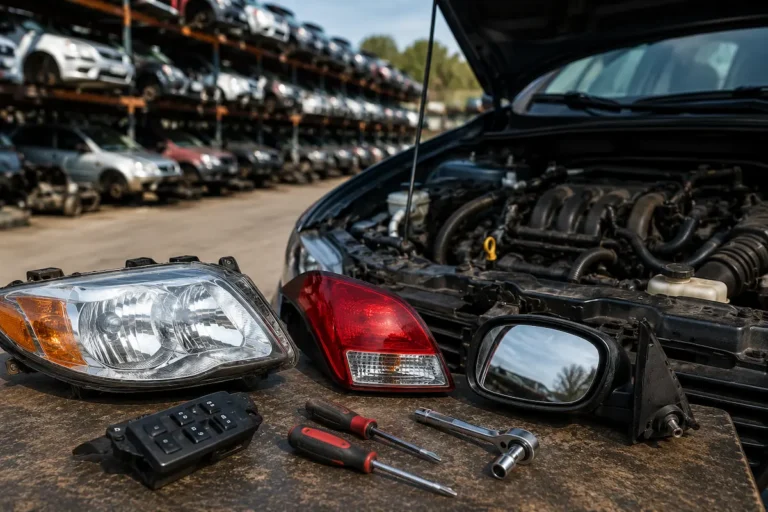
What car repairs can you do yourself with salvage yard parts? Some of the best beginner DIY car repairs include replacing side mirrors, headlights, taillights, door handles, interior trim, switches, factory radios, wiper arms, and certain intake components.
These repairs typically don’t require major engine work or advanced diagnostic equipment, making them a good place to start if you’re learning to work on your own vehicle.
For drivers searching for affordable DIY car repair parts, a self-service salvage yard can also help keep repair costs down. At Carolina Pick N Pull, you can search for compatible vehicles, bring your tools, pull the parts you need, and handle the installation yourself.
Here are some of the most common beginner car repairs worth considering.
What Are the Easiest Car Parts to Replace Yourself?
1. Side Mirrors
A damaged side mirror is one of the more approachable exterior repairs on many cars, trucks, and SUVs.
Depending on the vehicle, replacing the complete mirror assembly may involve removing an interior trim panel, disconnecting the electrical connector, and removing a few bolts.
When searching the salvage yard, make sure the replacement mirror has the same features as your original. Power adjustment, heating, turn signals, cameras, and blind spot monitoring can all affect compatibility.
2. Headlights and Taillights
Cracked or damaged headlights and taillights are another popular DIY project.
Complete factory light assemblies are commonly found on salvage vehicles and may be considerably more affordable than buying a brand-new OEM assembly.
Before pulling one, compare the shape, electrical connectors, mounting points, and part numbers when available. Even vehicles from the same model generation can have differences between trim levels and model years.
You can search Carolina Pick N Pull’s current vehicle inventory before heading to the yard.
3. Interior Trim and Small Interior Parts
Interior components are some of the best DIY car repair parts to find at a salvage yard because many are relatively simple to remove and replace.
Think door handles, cupholders, center consoles, sun visors, glove boxes, dashboard trim, switch panels, armrests, and other small components.
This can be especially useful with older vehicles where the manufacturer may no longer sell certain interior pieces new.
Take your time when removing older plastic parts. Years of heat and sun exposure can make clips and trim more brittle.
4. Power Window and Door Lock Switches
If a window or power lock stops responding, the switch itself may sometimes be the culprit.
On many vehicles, the switch assembly can be removed from the door panel and disconnected from a wiring harness without major disassembly.
Match the connector, button configuration, part number, and vehicle options whenever possible before choosing your replacement.
5. Interior and Exterior Door Handles
Broken door handles are another common repair that DIYers may be able to handle at home.
An interior handle may only require removing a few screws and clips. Exterior handles can be a little more involved because you may need to remove the interior door panel to reach the mounting hardware.
One benefit of a pull-your-own-parts salvage yard is that the donor vehicle gives you a chance to see how the part comes apart before you work on your own car.
Consider it your practice round.
6. Factory Radios and Other Interior Electronics
If your factory radio has stopped working, you may be able to replace it with another original unit from the same or a compatible vehicle.
Keeping the factory radio can preserve the original dashboard appearance without requiring an aftermarket installation kit.
However, some newer radios and electronic modules can be coded or paired to the original vehicle. Research your specific year, make, and model before buying an electronic component.
7. Seats and Seat Components
Sometimes the easiest solution to a badly damaged seat is replacing the seat or the damaged components rather than repairing the upholstery.
Salvage vehicles may provide replacement headrests, manual seat tracks, armrests, trim panels, seat cushions, or complete seats.
Powered, heated, ventilated, and airbag-equipped seats are more complicated. Check electrical connections and compatibility carefully, and leave safety-system work to a qualified professional when you’re unsure.
8. Air Intake Components
Plastic air boxes, intake tubes, resonators, and covers can crack or become damaged over time.
Because many of these components are relatively accessible under the hood, they can make good DIY projects.
Engine configuration matters here. A vehicle with the same model name may have several available engines, so make sure the donor vehicle matches yours before pulling the part.
9. Windshield Wiper Arms
A bent, stripped, damaged, or heavily corroded wiper arm can often be replaced with basic hand tools.
Most are secured near the base of the windshield with a nut or similar fastener. Marking the original position before removal can help you line up the replacement properly.
It’s a small repair, but it’s exactly the kind of project that can help a beginner become more comfortable working on a vehicle.
How Do You Know if a Salvage Yard Part Will Fit Your Car?
Start with your vehicle’s year, make, model, trim, and engine. When possible, compare the actual part number printed or stamped on your existing component.
Your Vehicle Identification Number can also help you confirm basic information about your vehicle. The National Highway Traffic Safety Administration VIN Decoder lets you enter a VIN and view manufacturer-provided vehicle information.
Don’t assume that two vehicles that look the same use identical parts. Engines, trim packages, production dates, electrical connectors, and mid-generation updates can all make a difference.
Carolina Pick N Pull’s online inventory search also includes a search for interchangeable vehicles, which can help you identify other vehicles that may be worth checking while you’re at the yard.
Pull Your Own Parts Guide for Beginners
If it’s your first visit to a self-service salvage yard, do a little homework before you arrive.
Know your vehicle information, research how the part comes off, and take photos of your existing part and connections. Bring the tools you’ll need, along with closed-toe shoes, gloves, and clothes you don’t mind getting dirty.
Once you find a potential replacement, inspect it before removing it. Look for cracks, corrosion, broken mounting tabs, damaged connectors, excessive wear, or signs that the part itself was involved in a collision.
You can review how Carolina Pick N Pull works before visiting and check the current used auto parts price list to get a better idea of what your project may cost.
Can’t find the vehicle you need? Use the Notify Me tool to submit the year, make, and model you’re looking for.
Which Car Repairs Should Beginners Avoid?
Not every repair is a good DIY project.
Safety-critical systems and complicated mechanical or electrical repairs deserve extra caution. Airbags, brake systems, steering components, high-voltage hybrid or EV systems, and repairs requiring specialized programming are generally not where a first-time DIYer should start.
It’s also worth checking your VIN with the NHTSA recall lookup. If your vehicle has an open safety recall, the manufacturer is responsible for providing the recall remedy according to the recall instructions rather than having you attempt the repair yourself.
Where Can You Find Used Auto Parts in North and South Carolina?
Carolina Pick N Pull operates self-service salvage yards serving drivers across southeastern North Carolina and northeastern South Carolina.
You can visit:
Cape Fear Pick N Pull in Wilmington, NC for customers throughout the Wilmington and Coastal Carolina area.
Sandhills Pick N Pull in Fayetteville, NC for customers throughout Fayetteville and Central North Carolina.
Grand Strand Pick N Pull in Conway, SC for customers throughout Conway, Myrtle Beach, Little River, and the Grand Strand area.
Frequently Asked Questions About DIY Car Repairs With Used Parts
Are salvage yard parts good for DIY car repairs?
Yes, many used parts can work well for DIY repairs when you carefully inspect the part and confirm that it’s compatible with your vehicle. Mirrors, lights, trim, handles, switches, and other removable components are especially popular options.
What are the best beginner car repairs?
Good beginner projects often include replacing a side mirror, taillight, interior trim piece, door handle, wiper arm, or simple switch assembly. The right starting point depends on your vehicle and your comfort level.
Should I bring my old part to the salvage yard?
If practical, yes. Having the original part with you makes comparing connectors, bolt locations, dimensions, and part numbers much easier. Photos can also help when bringing the old component isn’t practical.
Can I check salvage yard inventory before visiting?
Yes. Carolina Pick N Pull offers an online vehicle inventory search so you can look for vehicles that may have the parts you need before making the trip.
Start With a Repair You Can Handle
Doing your own car repairs doesn’t mean you need to rebuild an engine in the driveway.
Start small.
Replacing a mirror, light assembly, trim piece, switch, or door handle can help you learn how your vehicle goes together while potentially saving money on both parts and labor.
When you’re ready to look for your next project, search Carolina Pick N Pull’s current inventory and see what’s available at a location near you.
The right used part and a little patience could be all you need to get your car back in shape without paying new-part prices.