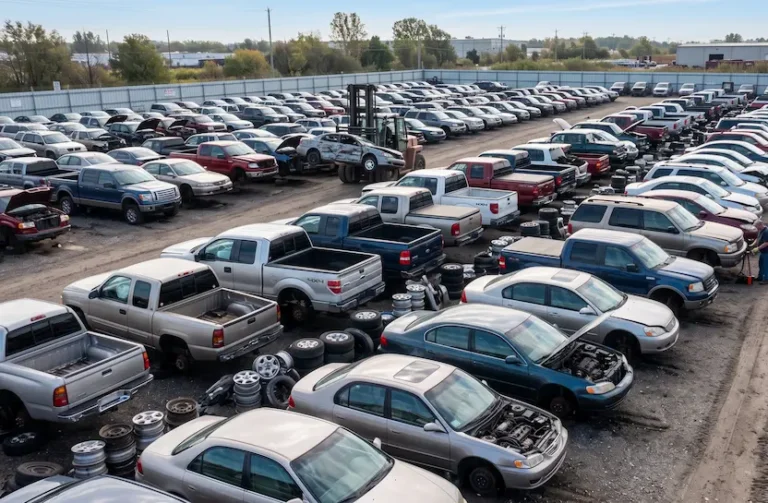
Every auto salvage yard across North and South Carolina features rows of popular sedans, trucks, and SUVs. Seeing a specific model frequently in a self-service yard doesn’t automatically mean it’s unreliable—often, it simply reflects sheer sales popularity.
Understanding why common junk cars end up in auto yards helps you spot valuable replacement parts and decide whether to repair or trade in your current vehicle. Explore the top vehicles found in salvage yards, why they land there, and how DIY repairers benefit.
Top Reasons Vehicles Land in Salvage Yards
- Mass Production Volume: Vehicles sold in massive numbers naturally make up a larger percentage of scrap inventory over time.
- Major Mechanical Failures: When head gasket, engine, or transmission repair costs exceed the total vehicle value, owners opt for a cash scrap payout.
- High Mileage Wear and Tear: Component wear spikes on high mileage vehicles junkyard arrivals reaching 200,000+ miles, making ongoing maintenance impractical.
- Structural Damage & Insurance Totals: Collision, flood, or frame damage often prompts insurance companies to declare vehicles economically unfeasible to repair.
Breakdown of the Most Common Junkyard Vehicles
1. Ford F-150
- Common Failure Points: Transmission wear, spark plug thread issues, and suspension fatigue.
- Why They End Up in Yards: Massive production numbers and decades of heavy work utility.
- Primary Parts Value: Truck beds, axle assemblies, trim, and body panels.
2. Honda Civic & Accord
- Common Failure Points: Transmission slippage (older CVTs) and clear coat oxidation.
- Why They End Up in Yards: Driven past 250,000+ miles until major engine or transmission repair costs spike.
- Primary Parts Value: Alternators, starter motors, interior trim, and sensors.
3. Toyota Camry & Corolla
- Common Failure Points: High-mileage engine oil consumption and rubber bushing wear.
- Why They End Up in Yards: Exceptional longevity keeps them running well past extreme mileage milestones.
- Primary Parts Value: Headlight housings, mirrors, doors, and intact body modules.
4. Chevrolet Silverado 1500
- Common Failure Points: Active Fuel Management (AFM) lifter failure and rocker panel rust.
- Why They End Up in Yards: Heavy commercial and towing use accelerates severe drivetrain wear.
- Primary Parts Value: Tailgates, transfer cases, wheels, and seats.
5. Nissan Altima
- Common Failure Points: CVT transmission failure and subframe corrosion.
- Why They End Up in Yards: Major repair estimates quickly surpass low secondary market resale values.
- Primary Parts Value: Headlights, bumpers, alloy rims, and intake parts.
Why Common Junk Cars Are a Goldmine for DIYers
Finding widely owned models in a self-service yard is a massive advantage for budget-conscious drivers. High sales volumes translate to an abundant supply of cars that break down most, making original replacement parts exceptionally easy to find.
- Superior OEM Compatibility: Original equipment manufacturer (OEM) factory parts provide exact fitment and longer life compared to cheap aftermarket parts.
- Massive Cost Savings: Sourcing functional components directly at a salvage yard reduces total repair costs by up to 70% compared to dealer prices.
- Interchangeable Model Years: Automakers often keep identical mechanical designs for 5–10 years, meaning older vehicles can use parts from newer model years.
Find Quality Used Parts at Carolina Pick N Pull
Looking for affordable components to fix your daily driver? Carolina Pick N Pull maintains an extensive inventory of late-model cars, trucks, and SUVs across three convenient locations in North and South Carolina:
- North Carolina: Visit our self-service yards in Wilmington, NC and Fayetteville, NC.
- South Carolina: Stop by our yard location in Conway, SC.
Before grabbing your tools, search real-time yard arrivals using the online Carolina Pick N Pull Vehicle Inventory search tool. To check automotive reliability trends and official safety recalls on high-mileage models, consult the official NHTSA Recalls Database.
Trying to track down hard-to-find parts for your car? Tell us your vehicle’s year, make, and model, and we’ll help you check current yard inventory or guide you on the best tools to bring!